
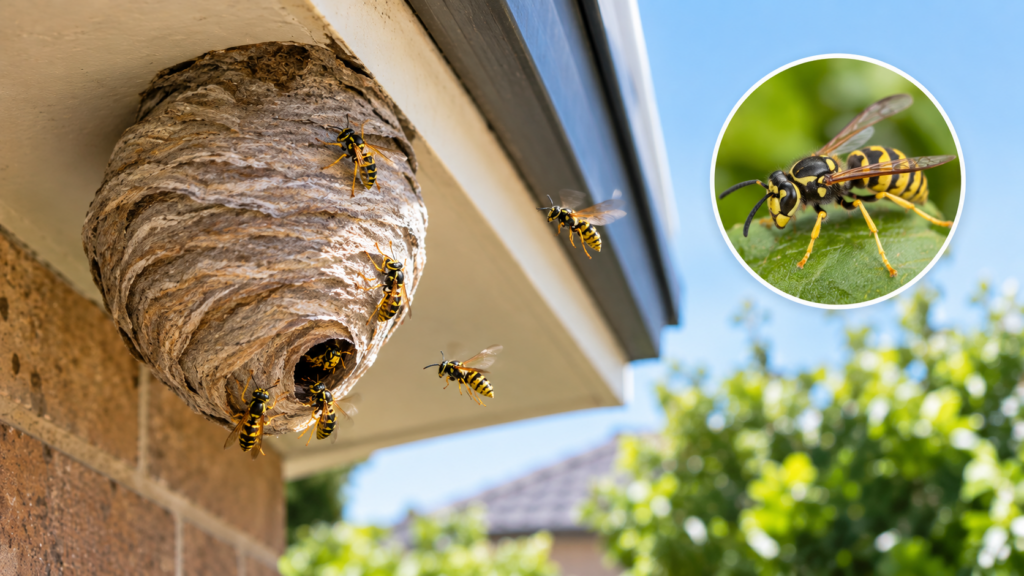
European wasps can become a problem around homes, gardens and outdoor entertaining areas. Their nests may be hidden in the ground, wall cavities or roof spaces, making them difficult to spot. Knowing the signs can help you spot a possible nest and avoid poking it.
If you suspect European wasps on your property, avoid disturbing them. Identifying the wasps correctly matters because European wasps can sting repeatedly when threatened.
If you suspect a nest, seek advice before arranging European wasp removal in Perth.
What Does a European Wasp Look Like?
European wasps have bright yellow and black markings on their bodies. They are similar in size to honey bees but have a smoother body with little visible hair.
Pay attention to these signs:
- Yellow and black bands: Their abdomen has clear yellow and black markings.
- Smooth body: Unlike bees, European wasps have very little body hair.
- Yellow legs: Their legs are usually yellow, and they may hang down while flying.
- Continuous activity around food: They often visit uncovered food, sweet One wasp does not confirm a nearby nest. Repeated activity around the same spot may be a sign of nesting
European wasps build nests from a paper-like material made by chewing wood fibres. The nest itself may be hidden, so their action will be visible before their location.
Common signs include:
- Wasps entering and leaving the same spot: Repeated flight to a hole in the ground, a wall gap or a roof cavity may indicate a nest.
- Increased wasp activity: Several wasps flying along the same route can suggest a nearby nest.
- Wasps around garden holes: European wasps often build underground nests, which may be difficult to see from the surface.
- Activity near buildings: Roof spaces, wall cavities and other sheltered areas can provide suitable nesting sites.
Do not approach a suspected nest to check its size or entrance. European wasps may become aggressive if disturbed, and the nest may contain many wasps.
European Wasps vs Paper Wasps
European wasps and paper wasps can look similar, but their nesting habits differ. Correct identification matters because different wasps may require different responses.
European wasps often build enclosed nests underground or inside cavities. Paper wasps generally make open, umbrella-shaped nests with visible cells. Their bodies and behaviour can also differ, so appearance alone may not always be enough to identify the species.
If you are unsure what you have found, keep your distance and seek advice rather than trying to remove the nest yourself.
What Should You Do If You Find a Suspected Nest?
Keep children and pets away from the area. Do not block the entrance, spray the nest, throw objects at it or attempt to dig it out. These actions can disturb the wasps and increase the risk of stings.
In Western Australia, suspected European wasp sightings should be reported to the Department of Primary Industries and Regional Development (DPIRD). You can report them through the MyPestGuide Reporter app or contact DPIRD for advice.
If wasps are entering your home or gathering near a doorway, avoid the affected area where possible. Note where you have seen them from a safe distance, but do not move closer to take photographs.
When Should You Seek Professional Help?
Repeated wasp activity around your home, garden or roof space is a good reason to seek advice. A professional can assess the activity and advise you on the next step.
If you need wasp nest removal in Perth, make sure the service can assess the type of wasp involved. A suspected European wasp nest should be reported to DPIRD first, rather than disturbed or treated without advice.
Professional wasp control in Perth can also help address other wasp problems around residential properties. Treatment depends on the wasp species and where the nest is located. Do not assume that a nest can be safely treated using ordinary household insect sprays.
How Can You Reduce Wasp Activity Around Your Property?
You cannot prevent every wasp from visiting your property, but a few simple steps can reduce the food sources that attract them.
- Keep outdoor food covered, especially during meals and barbeques.
- Close rubbish bins securely and clean spills around them.
- Avoid leaving sweet drinks uncovered outdoors.
- Clear fallen fruit and food scraps from entertaining areas.
- Check outdoor spaces for repeated wasp activity without approaching suspected nests.
These steps can reduce food-related activity, but they will not remove an established nest. If activity continues, seek appropriate advice. People searching online for wasp removal nearby should check that the provider understands the correct reporting process for suspected European wasps in Western Australia.
Conclusion
Watch for repeated wasp activity around the same opening, and keep away from any suspected nest. Repeated flights to one location, increased wasp activity and possible nest entrances around the ground or buildings are the commonest signs.
Keep your distance and report suspected European wasps to DPIRD. For other wasp concerns, suitable professional advice can help you determine the next steps for European wasp removal in Perth.
Frequently Asked Questions
1. Can European wasps build nests underground?
Yes. European wasps often build nests in the ground, including garden areas. They can also nest inside wall cavities, roof spaces and other sheltered locations.
2. Are European wasps dangerous?
They can be. European wasps may sting repeatedly when threatened. Stings can cause serious allergic reactions in some people. Keep your distance from suspected nests and seek urgent medical help if necessary.
3. Should I arrange wasp nest removal in Perth myself?
No. Do not try to remove, spray or block a suspected European wasp nest. Report suspected European wasps to DPIRD and follow its advice.
4. How can I tell if wasps are nesting in my roof?
Repeated wasp activity around the same roof gap or opening may indicate a nest inside the cavity. Do not enter the roof space or block the opening to investigate.
5. Does wasp control in Perth help prevent future activity?
Professional wasp control in Perth can help assess a wasp problem and recommend suitable action. Prevention also depends on reducing accessible food sources and addressing conditions that attract wasps.

