
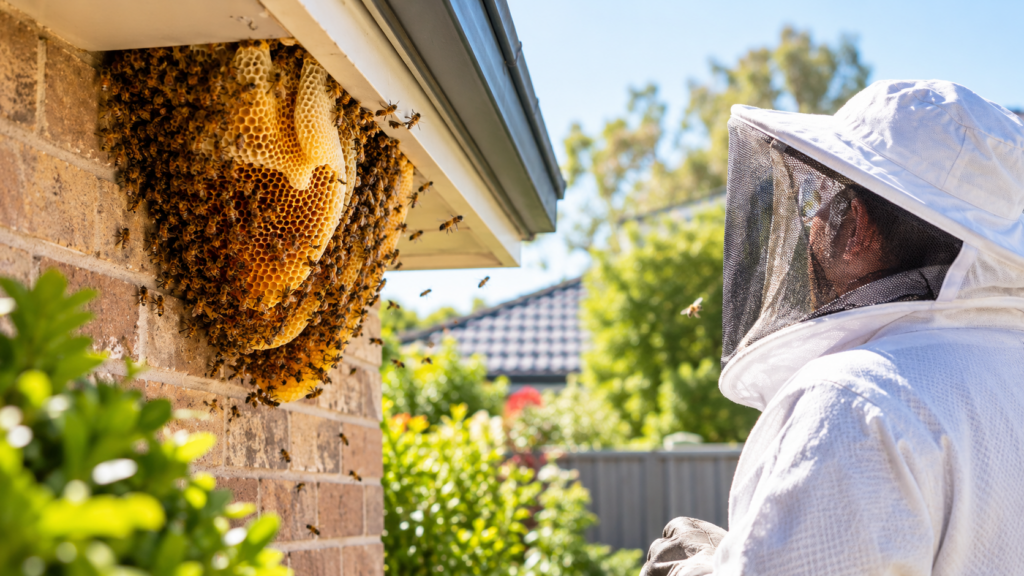
Finding a beehive at your property can be worrying, especially when the bees decide to settle near your front door or favourite spot in the garden.
You might enjoy a little buzz in the garden, but a colony setting up home right outside your door is another story! Keep your distance and avoid disturbing the bees. Trying to remove the hive yourself could leave you with a few painful stings to remember for a long time!
Professional bee removal in Perth can help you deal with the situation safely. The right approach depends on where the hive is located, how active the bees are and whether relocation is possible.
1. Keep Your Distance From the Beehive
If you find a beehive, do not approach it to get a closer look. Avoid touching the hive, blocking its entrance or disturbing the surrounding area. Sudden movements and attempts to drive bees away can increase the risk of stings.
Keep children and pets away from the area. If the hive is near a doorway, window or frequently used path, use another route where possible.
Do not throw water at the hive or spray it with household insecticides. These actions can agitate the bees and may not resolve the problem. Leave the area undisturbed until you can arrange a suitable inspection.
2. Check Where the Bees Are Gathering
From a safe distance, observe where the bees appear to be entering and leaving. This can help you describe the problem when contacting a removal service.
Bees may gather around tree branches, roof spaces, wall cavities, sheds and other sheltered spots. A group of bees hanging from a branch may be a temporary swarm rather than an established hive. A swarm may settle elsewhere, but you should not assume it will move on quickly.
If bees repeatedly enter the same gap in a wall or roof, a colony may have established itself inside the structure. Do not seal the opening. Trapping bees inside can cause further problems and make removal more difficult.
3. Avoid Removing the Hive Yourself
A beehive may look small from the outside, but the colony can be larger than it appears. Bees may also defend the hive if they sense a threat.
Climbing a ladder, opening a wall cavity or cutting into a roof space to reach the hive can put you at risk. These tasks may also damage your property.
Avoid using smoke, fire, chemicals or improvised equipment to remove the bees. Such methods can create additional hazards and may not remove the colony completely.
A professional can assess the hive’s location and recommend an appropriate solution. Depending on the circumstances, this may involve live removal, relocation or another suitable treatment.
4. Arrange a Professional Hive Inspection
A professional inspection helps establish where the bees are nesting and how best to manage them. The technician can assess the level of activity, the hive’s accessibility and any risks to people nearby.
Professionals offering bee hive removal in Perth service can also help determine whether the colony sits in an exposed location or inside a building structure. This matters because removing a visible swarm differs from removing an established hive from a roof or wall cavity.
When arranging an inspection, explain where you found the bees and how long they have been there. Mention whether the activity has increased or whether anyone has already been stung. If the hive is close to a busy entrance or a shared area, make this clear when booking.
5. Ask Whether Bee Relocation Is Possible
Honey bees play an important role in pollination, so relocation may be an option when the circumstances allow it. However, not every hive can be relocated easily. The colony’s location, condition and accessibility can affect the available options.
Bee relocation in Perth may be suitable when a professional can safely access the colony and move it to an appropriate location. An exposed swarm may be easier to manage than a colony established deep inside a wall cavity.
Ask the service provider whether live removal is possible and what the process involves. If relocation is not practical, they can explain the alternatives. The priority is to manage the risk while choosing a suitable approach for the property.
6. Prevent Bees From Returning to the Same Spot
After the bees have been removed, check whether the area needs further attention. If the colony occupied a roof space, wall cavity or another enclosed area, the remaining hive material may need to be removed where accessible.
Honeycomb left inside a structure can attract pests and create problems if it contains honey or wax. Do not open walls or roof spaces yourself to check for hidden material. Ask the removal professional whether further work is needed.
Once the area is safe, repair gaps and openings that could provide access to sheltered spaces. Check roof edges, eaves and sheds for damaged sections. Regular property maintenance can help reduce suitable nesting spots, although it cannot prevent every swarm from visiting.
When Should You Seek Immediate Help?
Contact a professional promptly if bees establish a hive:
- Near a doorway.
- At the children’s play area.
- Any place where people cannot easily avoid them.
Do not wait for the colony to grow before seeking advice. If someone is stung and develops difficulty breathing, swelling of the tongue or throat, dizziness or collapse, call 000 immediately.
These may be signs of a severe allergic reaction. Do not approach the hive to help someone if doing so would put you in danger.
Finally
Finding a beehive does not mean you need to remove it yourself. Keep your distance, protect children and pets, and avoid disturbing the colony. A professional inspection can help identify the type of bee activity and determine the safest next step.
If you need bee removal in Perth, arrange an assessment before attempting any removal. A suitable solution can address the immediate concern and help you decide whether relocation or further work is needed.
Frequently Asked Questions
1. Should I remove a beehive as soon as I find it?
Do not attempt to remove it yourself. Keep people and pets away, then arrange a professional assessment. The right response depends on the hive’s location and the level of risk.
2. Will a swarm of bees leave on its own?
A swarm may move on after a short period, but this is not guaranteed. Avoid disturbing it or standing underneath it. Seek professional bee removal in Perth nearby to tackle the situation.
3. Can honey bees be relocated instead of destroyed?
In some cases, yes. A professional can assess whether live removal and relocation are practical. The location and accessibility of the colony will affect the available options.
4. How do I know if bees have built a hive inside my roof?
Repeated bee activity around the same roof gap or opening may indicate a colony inside. However, this alone does not confirm a hive. A professional bee nest inspection can help establish what is happening.
5. What should I do if the beehive is inside a wall?
Do not seal the opening or break into the wall yourself. Keep your distance and arrange a professional inspection. The removal provider can assess access, explain the available options and determine whether further work is needed.

